
In the middle of everything else that comes with deciding to enter treatment — the emotional weight of the decision, the logistics, the nerves — packing can feel like a strange thing to be thinking about. But getting it right matters more than it might seem. Arriving prepared, with what you actually need and without things that will complicate your intake, lets you spend your first hours in treatment settling in rather than sorting out logistics.
This guide covers what to bring, what to leave at home, and a few California-specific considerations to keep in mind.
Before You Pack: Call and Ask

This is the single most important piece of advice in this entire guide: call your specific facility before you pack, and ask for their current packing list.
Every program has its own policies — some more restrictive than others — and these policies exist for good clinical and safety reasons specific to that facility’s population and structure. A list that worked for a friend’s experience at a different program, or a generic list from the internet, may not reflect what your specific facility allows. A quick call to admissions will save you the frustration of having items confiscated at intake or needing a family member to bring something back later.
With that said, here is a general guide that reflects what most California residential treatment and detox programs typically require and restrict.
Essential Documents
These should be packed first and kept easily accessible, as they’re needed during the admissions process itself:
- Valid photo ID — driver’s license, passport, or state ID
- Insurance card and policy information
- A list of current medications — including dosages and prescribing physician information
- Emergency contact information — names and phone numbers for the people you want involved in your care
Medications
This is one of the most important categories to get right, and one where the rules are strict for good reason.
Bring all current prescription medications in their original containers, with the prescription label intact. Facilities need to verify what you’re taking, the correct dosage, and who prescribed it — and this can only be done reliably from original, labeled containers. Pills in a daily organizer or unmarked container will likely need to be re-verified or may not be accepted.
Most medically supervised detox and residential programs do not have an on-site pharmacy but will have the medications needed to manage your specific situation safely, including any medications required for your detox protocol. Bring enough of your regular prescriptions to last your expected stay, and call ahead if you have questions about a specific medication.
Over-the-counter medications, supplements, and vitamins are often allowed but should be sealed and unopened — check with your facility, as policies vary.
Clothing
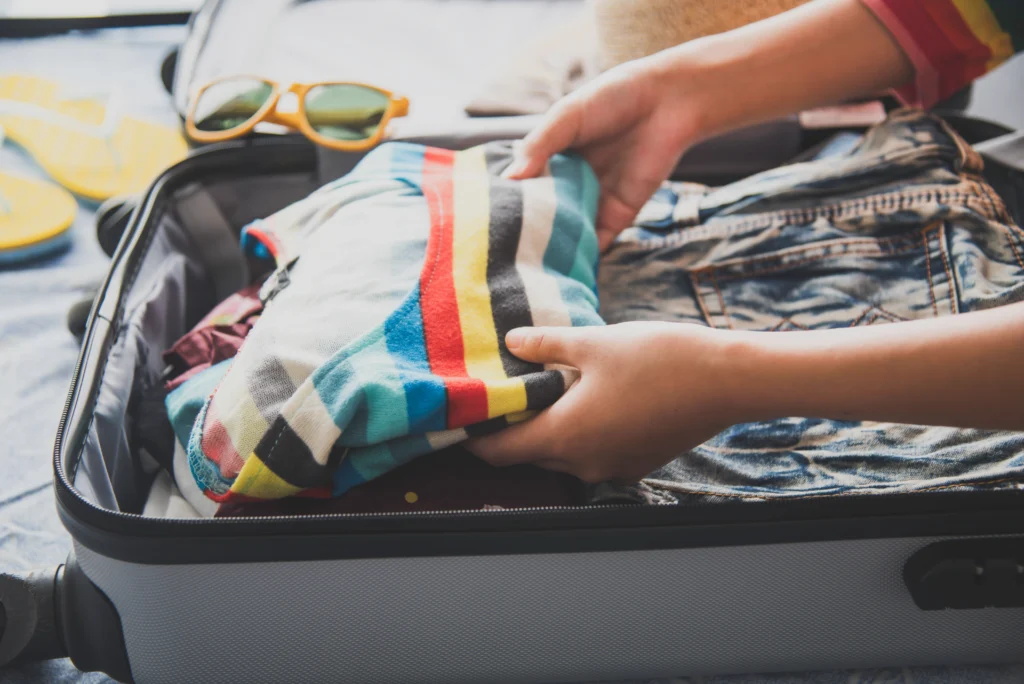
Most programs recommend packing approximately five to seven days’ worth of clothing, since on-site laundry is typically available on a weekly basis. Consider the season and California’s specific climate — desert heat in the summer, cooler evenings in the winter, and significant indoor/outdoor temperature differences year-round in many parts of the state.
What to pack:
- Comfortable, casual clothing — t-shirts, sweatshirts, sweatpants, jeans
- Pajamas or comfortable sleepwear
- Underwear and socks — enough for the week
- A light jacket or sweater for cooler evenings
- Workout or activewear if your program includes fitness or movement-based activities
- Comfortable closed-toe shoes for daily wear and any outdoor activities
- Flip-flops or shower shoes
- A swimsuit, if your facility has a pool — note that some programs require modest, one-piece styles for women
What to leave at home:
- Revealing or form-fitting clothing
- Anything referencing drugs, alcohol, or containing profanity or inappropriate imagery
- Excessive amounts of clothing — space is typically limited, and less is genuinely easier to manage
Toiletries and Personal Care
Most facilities require toiletries to be new, sealed, and alcohol-free — this is a safety requirement, not a preference, since many common toiletries contain alcohol as an ingredient.
Generally accepted:
- Toothbrush and toothpaste
- Shampoo, conditioner, and body wash
- Deodorant (alcohol-free)
- Hairbrush or comb
- Feminine hygiene products
- Shaving supplies — check with your facility about whether electric or disposable razors are permitted
- Lotion and basic skincare
Check before bringing:
- Mouthwash — often must be alcohol-free
- Perfume, cologne, or aerosol products — frequently restricted
- Nail polish and nail polish remover — sometimes prohibited due to fume sensitivity or fire safety
- Makeup — usually fine, but check facility-specific policy
Comfort Items
These small, personal items can make a genuine difference in how grounded and supported you feel during a difficult transition:
- Photos of family, friends, or loved ones
- A journal and pen
- Books — most facilities welcome reading material focused on recovery, personal growth, or general fiction, though content that glorifies substance use or contains explicit material is typically not allowed
- A small, meaningful personal item — a piece of jewelry, a favorite blanket, or something that feels like home
Electronics: What’s Typically Allowed and What Isn’t
Electronics policies vary more than almost any other category, and they exist primarily to protect the privacy and focus of everyone in the program — not just you.
Most residential facilities restrict or prohibit personal smartphones during at least the early part of treatment, since internet access, cameras, and messaging features can interfere with the therapeutic environment and compromise the privacy of other clients. This isn’t simply a house rule — it reflects the seriousness with which treatment programs are required to protect patient confidentiality. Substance use disorder treatment records receive some of the strongest federal privacy protections in healthcare under 42 CFR Part 2, and limiting devices that can photograph, record, or broadcast information helps every client’s privacy stay protected, not just your own. Some programs allow limited phone access during specific designated times.
Often allowed, depending on the facility:
- E-readers without Wi-Fi capability
- Basic alarm clocks (without radio or Bluetooth, depending on policy)
- Simple music players without internet access, generally requiring headphones
Typically not allowed:
- Smartphones, tablets, or laptops with internet access (policies vary — some programs allow limited or supervised use)
- Smartwatches with messaging or internet capability
- Gaming devices
If having access to a phone or laptop for specific reasons — work obligations, childcare coordination — is important to your situation, raise this directly with admissions before arrival. Some programs make accommodations on a case-by-case basis.
Often allowed, depending on the facility:
- E-readers without Wi-Fi capability
- Basic alarm clocks (without radio or Bluetooth, depending on policy)
- Simple music players without internet access, generally requiring headphones
Typically not allowed:
- Smartphones, tablets, or laptops with internet access (policies vary — some programs allow limited or supervised use)
- Smartwatches with messaging or internet capability
- Gaming devices
If having access to a phone or laptop for specific reasons — work obligations, childcare coordination — is important to your situation, raise this directly with admissions before arrival. Some programs make accommodations on a case-by-case basis.
What Not to Bring — At All
Across virtually every residential treatment and detox program, the following are prohibited:
- Alcohol or any illicit substances
- Weapons of any kind, including pocket knives
- Sharp objects, including certain scissors or razors depending on policy
- Vapes, e-cigarettes, and cigarettes — though some facilities have designated smoking areas and allow cigarettes specifically; check your facility’s policy
- Candles, incense, or anything involving an open flame
- Pornographic material or content that sexualizes addiction or substance use
- Large amounts of cash or valuable jewelry — bring only what you genuinely need
California-Specific Considerations
A few things worth knowing if you’re traveling to a California facility, particularly in desert regions like the Coachella Valley:
Climate. Desert heat in spring through fall can be intense, with significant daily temperature swings. Pack breathable fabrics for daytime and a layer for cooler mornings and evenings, even in summer.
Travel. If you’re flying into a regional airport, confirm with your facility whether transportation is arranged or whether you’ll need to coordinate a rideshare or shuttle. Many private residential programs offer airport pickup as part of the admissions process — ask in advance.
Documentation for travel. If you’re flying, your valid photo ID doubles as both your travel document and your facility intake document — keep it easily accessible in carry-on luggage, not checked baggage.
A Final Word on Packing
It’s natural to want to bring more than you need — comfort items, extra clothing, things that feel like a safety net during an uncertain transition. But most people find that less is genuinely easier to manage, both practically and emotionally. A simple, well-organized bag with what you actually need lets you focus your energy on the work ahead rather than managing excess belongings in a space that likely has limited storage.
If you’re unsure about any specific item, the simplest approach is always to ask. A good admissions team expects these questions and would much rather answer them in advance than sort out a confiscated item on the day you arrive.
Preparing for Your Stay at New Beginnings Recovery
New Beginnings Recovery in Rancho Mirage provides a specific packing list to every client prior to admission, so there’s no guesswork involved in preparing for your stay. Our admissions team is happy to answer any questions about what to bring, what to expect, and how to prepare — including travel logistics for those coming from outside the Coachella Valley.
Our team is available 24 hours a day at (760) 924-9419, or you can reach out online with any questions before your arrival.
Packing is one small, manageable step in a much bigger journey. Let us help make it easy.
New Beginnings Recovery is a private detox and residential treatment program located in Rancho Mirage, California, serving individuals and families across Palm Springs and the Coachella Valley.