
Coming home from military service is supposed to be a relief. And for many veterans, it is — eventually. But for a significant number of the men and women who have served, coming home means carrying something invisible that doesn’t fit neatly into civilian life. Something that surfaces at night, or in crowded places, or in the quiet moments when there’s nothing left to distract from it.
And somewhere along the way, a drink helped. Or a prescription did. Or something else did, for a while. Until it didn’t anymore — and the thing it was managing was still there, joined now by something new.
For veterans in Riverside County and across the Coachella Valley, this is a familiar story. And it deserves more than a generic answer.
The Scale of the Problem Among Veterans

Military service creates conditions of profound psychological risk that civilian life rarely matches. Combat exposure. The loss of fellow service members. Moral injury. The chronic stress of sustained deployment. And then the disorienting transition back to a world where none of that context exists for most of the people around you.
The numbers reflect this reality clearly. According to recent research, nearly 13% of U.S. veterans struggle with PTSD — almost double the civilian rate. And among veterans with PTSD, the co-occurrence of substance use disorder is not the exception — it’s the norm. Research estimates that approximately 63% of veterans with PTSD from recent conflicts also battle a co-occurring substance use disorder.
Alcohol is the most common substance involved. For veterans managing the hyperarousal, the intrusive memories, the emotional numbing, and the sleep disruption of PTSD, alcohol offers something that feels like relief. It quiets the nervous system. It softens the edges. It makes sleep possible when the alternative is nightmares.
The problem is that it also makes recovery impossible — as long as the PTSD driving the drinking goes untreated.
Why Veterans Face Unique Barriers to Getting Help
Understanding what keeps veterans from seeking treatment is as important as understanding what treatment should look like. Because the barriers are real, specific, and often deeply rooted in military culture itself.
The stigma around help-seeking is profoundly embedded. Military culture, by necessity, builds identity around strength, self-reliance, and the suppression of vulnerability. Seeking help for a mental health condition — let alone for substance use — can feel like a violation of that identity. For many veterans, admitting they’re struggling feels like admitting weakness in a community where weakness has real consequences. This stigma is not irrational. It’s a product of culture. But it keeps people from getting care they need and deserve.
The fear of career and benefit consequences. Active duty and recently separated service members may fear that seeking mental health or addiction treatment will affect their security clearance, their record, or their access to benefits. These fears are not always unfounded, and they create a chilling effect on help-seeking that extends well beyond separation from service.
The VA system has capacity limitations. VA Loma Linda Healthcare System serves veterans across a vast geographic area of the Inland Empire and Coachella Valley. While the VA has expanded its network of community-based outpatient clinics — including the Sy Kaplan clinic in Palm Desert, which transitioned to VA-staffed care in 2024 — the system has faced documented capacity constraints, with clinics reaching peak enrollment at various points. For veterans needing immediate access to residential dual diagnosis care, waitlists and geographic limitations can be real obstacles.
The complexity of dual diagnosis goes undertreated. Even within VA settings, integrated treatment for co-occurring PTSD and substance use disorder — where both conditions are addressed simultaneously by a coordinated team — is not universally available or consistently delivered. Veterans who receive addiction treatment without trauma-focused care are left with the underlying driver of their substance use unaddressed, which is one of the most significant predictors of relapse in this population.
Why Private Dual Diagnosis Treatment Is a Valid and Often Better Option
For veterans in Riverside County who need immediate access to high-quality, integrated dual diagnosis care — and who have private insurance, TRICARE, or the means to pursue private treatment — private residential programs offer important advantages.
TRICARE covers residential dual diagnosis treatment. This is something many veterans and their families don’t realize. TRICARE provides comprehensive coverage for addiction treatment including detox, inpatient rehab, and outpatient services — similar to PPO programs offered by private insurers. For veterans who are eligible for TRICARE and want access to private residential care, coverage is available. A quality admissions team will verify TRICARE benefits promptly and walk veterans through their options clearly.
Immediate access, without waitlists. Private residential programs can often provide same-day or next-day admission — a critical advantage for veterans who have reached the moment of readiness and need to act on it immediately. That window of readiness is precious. A waitlist is not an acceptable response to it.
Privacy and discretion. For veterans concerned about the stigma of treatment, or about the implications of having mental health and substance use treatment documented in certain contexts, a private residential facility offers a level of confidentiality that public systems cannot. Federal law under 42 CFR Part 2 provides robust protection for substance use disorder treatment records — what happens in a private residential program stays there, with legal protections that go beyond standard HIPAA.
A setting designed for healing. The Coachella Valley — just over an hour from the Riverside County population centers of Riverside, San Bernardino, and the Inland Empire — offers the geographic distance from familiar triggers that early recovery benefits from, combined with a restorative desert environment that research supports as conducive to physiological and psychological healing. For veterans whose daily environment is saturated with the stress and cues of civilian life, the quiet remove of the desert can itself be part of the treatment.
What Dual Diagnosis Treatment for Veterans Should Include
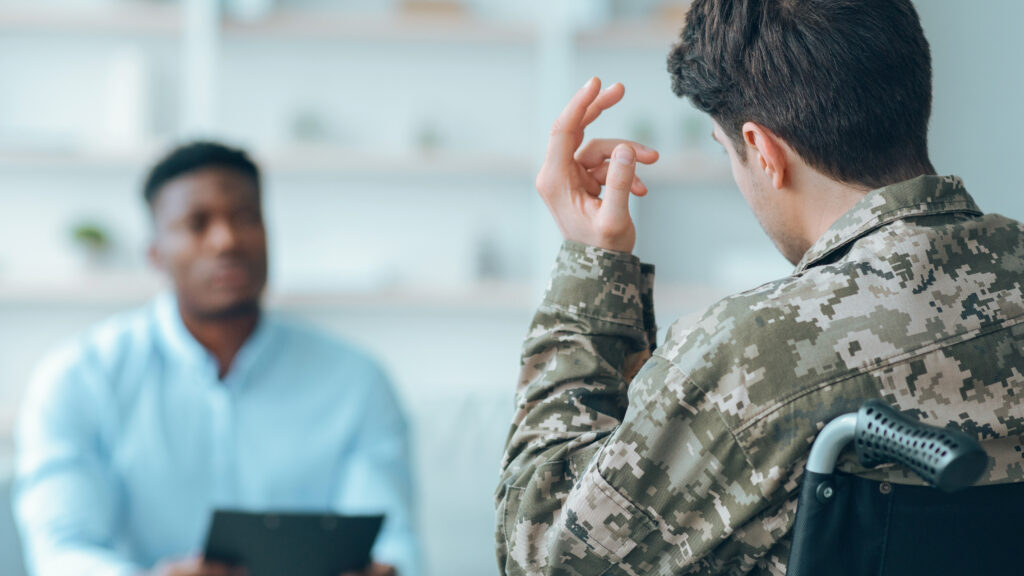
Not every dual diagnosis program is equipped to serve veterans well. The intersection of combat trauma, moral injury, military culture, and substance use disorder creates a clinical picture that is specific enough to require genuine expertise — not just good intentions.
Trauma-informed care that understands military experience. PTSD among veterans has specific features — combat exposure, moral injury, the particular quality of military trauma — that differ meaningfully from civilian trauma presentations. A clinical team that understands these features, and that knows how to engage with veterans in a way that doesn’t trigger defensiveness or replicate the institutional dynamics of military hierarchy, delivers care that actually reaches people.
Integrated treatment of PTSD and substance use disorder simultaneously. The research is clear that integrated approaches which address both mental health and substance use disorders concurrently are crucial for successful outcomes in veterans with dual diagnosis. Cognitive behavioral therapy and Prolonged Exposure therapy are evidence-based for PTSD in veterans. EMDR has a growing evidence base for both PTSD and substance use disorder. Motivational enhancement and relapse prevention are essential addiction components. A quality program integrates all of these into a unified treatment plan.
Medically supervised detox with veteran-specific clinical awareness. For veterans with significant alcohol or substance dependence, safe medical detox is the foundation — and the clinical complexity of managing withdrawal in someone with co-occurring PTSD requires a team with expertise in both. The hyperarousal and anxiety that spike during withdrawal are particularly intense for veterans with PTSD, and the clinical protocol needs to account for this.
A therapeutic environment that respects military identity. Veterans don’t stop being veterans in treatment. A program that understands and respects military culture — that doesn’t pathologize service, doesn’t require people to dismantle their identity in order to heal, and that recognizes the specific forms of resilience and strength that military experience builds — creates a treatment environment where veterans can actually engage rather than comply superficially.
A realistic path back to life. Veterans in treatment are often managing a complex set of practical realities — VA benefits, disability claims, family reintegration, employment transitions, the ongoing management of service-connected conditions. A quality discharge plan accounts for these realities, connects veterans with appropriate VA and community resources, and creates a continuing care structure that is realistic about the demands of their post-service life.
A Note on the Veterans Crisis Line
If you or a veteran you love is in crisis right now — experiencing thoughts of suicide, self-harm, or acute psychological distress — please contact the Veterans Crisis Line immediately:
- Call: 988, then press 1
- Text: 838255
- Chat: VeteransCrisisLine.net
The Veterans Crisis Line is available 24 hours a day, staffed by responders who understand military experience, and connects veterans with immediate support. Please use it.
For Veterans Ready to Take the Next Step
If you’re a veteran in Riverside County or the Coachella Valley who is ready to address both the substance use and the mental health condition that have been driving it — and you want access to private, expert, integrated care without a waitlist — help is available now.
New Beginnings Recovery is a private detox and residential treatment program in Rancho Mirage, just over an hour from Riverside and minutes from the heart of the Coachella Valley. Our program offers medically supervised detox and residential dual diagnosis treatment in a calm, private setting — with a clinical team experienced in trauma-informed care and the specific challenges veterans face.
We work with TRICARE and most private insurance plans. Our admissions team is available 24 hours a day at (760) 924-9419, or you can reach out confidentially online at any time. Insurance verification — including TRICARE — takes just a few minutes.
You served. You deserve care that takes all of what you’ve been through seriously. We’re here when you’re ready.